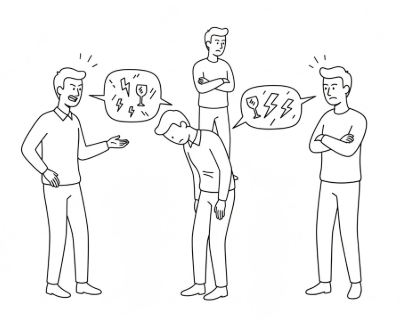
Incivility and vertical violence have always existed in nursing, but digital technologies have changed their reach, speed, and visibility. In Canadian hospitals, community programs, and classrooms, these behaviours now show up not only in hallways and report rooms, but also in email inboxes, group chats, virtual meetings, and social media feeds. This is not just an issue of “hurt feelings.” Incivility, bullying, and cyberbullying are driving moral distress, attrition, and fragmentation in a workforce that Canada cannot afford to lose. This is not just about hurt feelings; it is about psychological safety, ethics, retention, and the kind of profession we are handing to the next generation.
Naming the Problem: Incivility, Vertical Violence, and Cyberbullying
Incivility in nursing includes those low‑grade but corrosive behaviours we often shrug off: sarcasm, eye‑rolling, gossip, exclusion from information, and subtle sabotage that undermines colleagues’ confidence and credibility.1 Vertical violence is bullying that flows along power gradients. It is highly visible in Canadian data on workplace violence and abuse. Vertical violence adds power into the mix (bullying that travels along hierarchies, such as manager‑to‑staff, faculty‑to‑student, or physician‑to‑nurse, often justified as “tough love” or “just how it’s always been,”).2 Cyberbullying and cyber‑incivility extend these patterns into digital spaces: hostile emails, disparaging group chats, screenshots of colleagues’ mistakes, and social media posts that name and shame individual nurses, teams, or leaders.
Canadian nursing students describe clinical environments where they are belittled, ignored, or set up to fail, often by nurses they hoped would be role models.3 Faculty and students report incivility in classrooms and online learning platforms, from dismissive comments to overt hostility, reflecting a long history of bullying woven into nursing’s professional socialization. When we treat these experiences as rites of passage, we quietly teach the next generation to expect, accept, and eventually reproduce the same behaviours.
A Canadian Lens: Systems, Not “Bad Apples”
Canadian scholarship and policy reports are increasingly explicit that bullying and violence in nursing are structural issues. Work in Canadian nursing education journals calls for revisiting the histories of bullying in the profession, showing how hierarchy, gender, and colonial logics have shaped who is welcomed, who is silenced, and who is pushed out.3 National surveys and federation reports highlight that nurses across Canada face high rates of verbal abuse, harassment, and physical violence, and that these experiences are strongly linked to burnout and an intention to leave.
At the same time, Canadian Institute of Health Information (CIHI) workplace measures document rising lost‑time claims for health workers (including professional nurses) associated with injury, illness, and workplace violence, signalling that harm to nurses is now a measurable health‑system risk, not just an anecdotal concern.4 When we connect incivility and bullying to these data, the question shifts from “Why can’t people just get along?” to “Why are we tolerating conditions that damage both providers and patients?”
When Leaders are the Target: Vertical Violence
Although much of the literature focuses on bullying from those with formal power toward those with less, nurse leaders (managers, directors, Clinical Nurse Educators, Clinical Nurse Specialists) are also on the receiving end. Commentaries on the “nurse bullying epidemic” acknowledge that bullying is systemic and can flow in multiple directions, including “staff‑up” behaviours where nurses target leaders who hold them accountable or implement unpopular changes.1 Nurse leaders describe being undermined through gossip, micro‑resistance, and deliberate non‑cooperation, and in some cases more overt hostility, for example, complaints weaponized against them, organized push‑back when they address racism or unsafe practice, and public criticism in interprofessional meetings.1
Layered on top of that is incivility and bullying from non‑nursing leaders and administrators. Nurse managers and advanced practice nurses report being sidelined in decision‑making, publicly dismissed, or pressured to stay silent about safety concerns by executives who control budgets and structures but may not understand nursing’s ethical and regulatory obligations.5 The emotional labour of “absorbing” this behaviour while still protecting staff, advocating for patients, and holding their own regulatory accountability is one of the reasons many experienced nurses walk away from leadership altogether.
The Digital Twist: Bullying Beyond the Workplace
Digital platforms amplify all of this. Nurses describe bullying and exclusion in group chats, email threads, virtual classrooms, and social media groups, where harmful comments can be copied, shared, and revisited long after the initial interaction. Cyberbullying of health professionals increasingly includes doxing (sharing personal information online to intimidate) and targeted harassment campaigns that can drag in families and communities.6
For nurse leaders, digital spaces can become arenas where resistance to change is personalised and intensified. A scheduling decision or a new documentation policy may trigger angry emails, hostile chat messages, or posts that question a leader’s integrity or competence. In some Canadian accounts, nurse leaders and frontline nurses alike describe feeling “never off duty,” carrying their workplaces in their pockets and bracing for the next notification. The psychological impact is cumulative, particularly when formal supports feel thin.
A Solutions‑Focused Approach
The good news is that Canadian nursing already has many of the tools needed to respond. The challenge now is to use them deliberately, and to extend protections to nurse leaders as well as staff.
- Anchor responses in ethics and standards
The Canadian Nurses Association’s Code of Ethics calls explicitly for preventing horizontal violence, bullying, and harassment, and for creating processes that protect those who report unsafe or unethical situations. Best practice guidelines such as RNAO’s “Preventing Violence, Harassment and Bullying Against Health Workers” and the CNA–CFNU joint position statement frame violence‑free, respectful workplaces as essential for safe care. When leaders raise concerns about incivility (including from non‑nursing administrators) they can and should ground their advocacy in these shared ethical and practice commitments.
- Make organizational accountability real
Canadian reports on sustaining nursing emphasize that employers, regulators, unions, and governments all share responsibility for creating psychologically safe workplaces. Concrete steps include:
- Clear policies that define bullying, harassment, and cyber‑incivility and apply across disciplines and hierarchies.
- Confidential, accessible reporting systems with transparent follow‑up, so any nurse (staff or leader) can report bullying from colleagues, physicians, or executives without fear of retaliation.
- Adoption of the National Standard for Psychological Health and Safety, integrated into occupational health and safety committees, accreditation, and executive performance metrics.
- Protect and equip nurse leaders
Federal work on nursing retention in Canada underscores the importance of “inspired leadership” and psychologically safe environments as key to keeping nurses in the system. That includes:
- Protecting and resourcing Chief Nursing Officer and senior nursing roles so nursing voices carry weight in corporate decisions.
- Providing structured leadership development—coaching, conflict resolution skills, digital professionalism, and trauma‑informed approaches—so leaders are equipped to respond to bullying without burning out.
- Recognizing nurse leaders as potential victims of bullying and cyberbullying, ensuring they have access to the same supports, employee assistance programs, and union or regulatory recourse as other nurses.
- Bring a digital lens to every intervention
In 2025, any conversation about workplace violence and civility must include digital spaces. Canadian guidelines and toolkits increasingly acknowledge the need to:
- Explicitly include electronic communication and social media in workplace violence and bullying policies, clarifying expectations for behaviour in email, messaging platforms, and virtual meetings.
- Educate nurses and leaders about cyber‑incivility and cyberbullying, including safe documentation of incidents, boundaries around off‑duty communication, and appropriate use of social media under regulatory standards.
- Develop coordinated responses (across employers, unions, and professional associations) to online harassment and doxing of health workers, so individual nurses and nurse leaders are not left to manage complex digital attacks alone.
Incivility and vertical violence are not inevitable features of “strong personalities” or “high‑stress environments.” They are modifiable system issues. From a Canadian perspective, the way forward lies in fully using the ethical frameworks, best practice guidelines, national standards, and retention strategies already at our disposal. By extending those protections to everyone in the nursing family, including the leaders who are trying working tirelessly to hold our systems together.
References
- Edmonson C, Zelonka C. Our Own Worst Enemies. Nurs Adm Q. 2019 Jul;43(3):274–9.
- Atashzadeh Shoorideh F, Moosavi S, Balouchi A. Incivility toward nurses: a systematic review and meta-analysis. J Med Ethics Hist Med 2021;14:15.
- MacDonald CM, Hancock PD, Kennedy DM, MacDonald SA, Watkins KE, Baldwin DD. Incivility in practice – incidence and experiences of nursing students in eastern Canada: A descriptive quantitative study. Nurse Education Today. 2022 Mar 1;110:105263.
- CIHI. Tracking workplace measures | CIHI [Internet]. 2024 [cited 2025 Nov 30]. Available from: https://www.cihi.ca/en/the-state-of-the-health-workforce-in-canada-2022/tracking-workplace-measures
- Barlow ME. Understanding Successful Strategies Human Service First-Level Managers Utilize when Addressing Workplace Incivility.
- Zhang W, Guo Z, Zhu C, Bakaev M, Zhang J, Evans R. Workplace Cyberbullying Among Healthcare Workers: A Systematic Review of the Prevalence, Antecedents and Consequences. International Journal of Mental Health Nursing. 2025;34(5):e70157.

 nursingforsocialjustice
Leave a comment